Brain Scans Link Lucid Dreaming with Greater Metacognition
Neuroscientists at MPI have found lucid dreamers have greater self reflection and metacognition - and it's written in their brain scans.
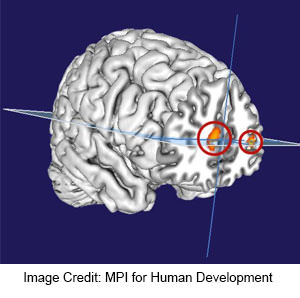
It should come as no great surprise that lucid dreamers are more self reflective than the general population.
But the big news this week is that a physiological difference has actually been proven through brain scans.
Neuroscientists at the Max Plank Institute for Human Development in Berlin and the Max Plank Institute of Psychiatry in Munich compared brain structures of frequent lucid dreamers against people who rarely or never control their dreams.
They found that the anterior prefrontal cortex (the area controlling conscious cognition and self reflection) is consistently larger in people who lucid dream.
This difference in volume suggests a link between lucid dreaming and metacognition (thinking about thinking).
"Our results indicate that self reflection in everyday life is more pronounced in persons who can easily control their dreams," said Elisa Filevich, post-doc in the Center for Lifespan Psychology at the Max Planck Institute for Human Development.
So, does the structure of your brain actually lend itself to lucid dreaming and metacognition? Or it could be that training yourself to have lucid dreams actually makes a physiological difference in your brain?
To find out, the researchers want to know whether these metacognitive skills can be developed through mental training. A follow-up study intends to train lucid dreamers in metacognition, to see how it effects their waking self reflection and abilitiy to have lucid dreams.

About The Author
Rebecca Casale is a lucid dreamer and a science writer with a special interest in biology and the brain. She is the founder of World of Lucid Dreaming and Science Me.