
Precognitive Dreams and Their Causes
The idea of precognitive dreams captivates the imagination, whether we ardently believe in psychic dreams or are merely staggered by the coincidence. So what is the reality of precognitive dreaming?
Could the unconscious mind truly possess the power to unveil what lies ahead? Or are there rational explanations for why our dreams sometimes seem to predict the future?
Precognitive Dreams of Tragedy
Shortly after the Titanic sank on the morning of April 15, 1912, hundreds of people came forward with reports of psychic dreams detailing the demise of the great ship. Arguably, these people had no foresight into the ocean conditions that night, nor the preponderance of icebergs, nor the captain's desire to reach New York earlier that expected.
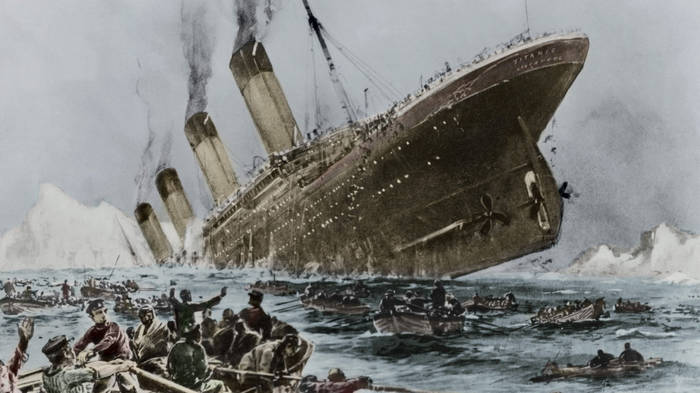
Amazingly, it was possible to validate 19 of the precognitive dream reports, including one date-stamped letter in which a Titanic dream was described in detail several days before the fateful night. Does this prove that psychic dreams are real? It's certainly compelling, yet there's a factor at play that quietly undermines these Titanic dream reports.
Time for a quick thought experiment. Imagine rolling a die six times. The chances are you rolled a six at least once. In much the same way, if you have enough dreams, you'll eventually dream of a sinking ship. Now apply that same statistical principle to the entire population who came to hear about the sinking of the Titanic in the weeks that followed.
In 1912, the world's population was estimated to be around 1.6 billion people, each experiencing an average of five dreams per night. To be conservative in our estimates, we might assume that half of those people didn't remember their dreams, and the other half remembered only one dream each night. Now we multiple that figure by seven to include one week's worth of dreams leading up to the Titanic tragedy, and we have a pool of 5.6 billion potential precognitive dreams to choose from.
The numbers are so big that they may as well be arbitrary. For we could include a month's worth of dreams leading up to the event, or increase the order of magnitude to include every dream theme instead of only the dream count. The point is that, collectively, we experience a lot of dreams. How many do you suppose featured a sinking ship leading up to the Titanic disaster?
Statistically, it would not be surprising at all if thousands of people had seemingly precognitive dreams about a sinking ship in April 1912 - and then retrospectively linked it to the Titanic.
What's more, we must factor in a healthy dose of fear and intuition. In the days leading up to the launch, the media trumpeted the RMS Titanic as the largest and most luxurious ship ever built. Ironically, the enormous ship was claimed to be "unsinkable". What superb dream fodder!
As if to further stoke the public's imagination, on April 11, 1912 when the Titanic left port at Southampton, The New York Times featured the somewhat trumped-up headline: "TITANIC IN PERIL ON LEAVING PORT; Suction of Giant Liner Breaks Hawsers [ropes] of the New York [another ship], Which Floats Helpless".
Clearly, the Titanic was not in peril at this time, although there was a near collision between two other ships, incited by the suction of the great ocean liner pulling them into its wake. The event, witnessed by hundreds of people and then exaggerated to millions via newspapers and word-of-mouth, could well have ignited some of those famous precognitive dreams of the Titanic.
Precognitive Dreams of Death
How many times have you dreamed of dying? I've certainly had my fair share of death dreams. And yet it's a sufficiently infrequent occurrence that it would be noteworthy if I reported dreaming of my own death, and then died unexpectedly a few days later. Bizarrely, this is reportedly what happened to Abraham Lincoln.
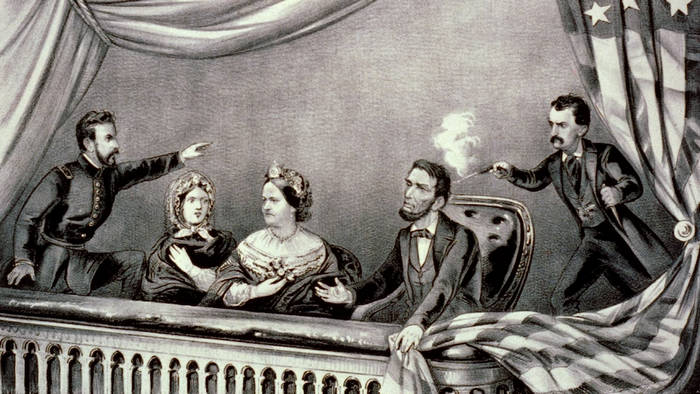
On the morning of April 15, 1865 (precisely 47 years to the day before the Titanic sank) President Lincoln famously died of a gunshot wound inflicted by the well-known stage actor, John Wilkes Booth. According to his bodyguard and friend, Ward Hill Lamon, Lincoln related an apparently precognitive dream three days before his death:
"I kept on until I arrived at the East Room, which I entered. There I met with a sickening surprise. Before me was a catafalque [a scaffold for a coffin], on which rested a corpse wrapped in funeral vestments. Around it were stationed soldiers who were acting as guards; and there was a throng of people, gazing mournfully upon the corpse, whose face was covered, others weeping pitifully. Who is dead in the White House? I demanded of one of the soldiers. The President, was his answer; he was killed by an assassin." - Recollections of Abraham Lincoln 1847–1865
Apparently, though, Lincoln didn't take the dream to heart. Because three days later, when he attended a play at Ford's Theatre, he gave his bodyguard the night off. His footman was also off duty, and the policeman guarding the Presidential Box slunk off to a tavern at intermission.
All this allowed Booth to walk through the front entrance of the theater unhindered and barricade himself in the hallway leading to the President's box. Knowing Our American Cousin by heart, Booth waited until the audience were roaring with laughter at a particular line to shoot Lincoln in the back of the head with a pistol.
What are we to make of Lincoln's precognitive dream and, especially, its timeliness relating to his demise? Is there a more parsimonious explanation drawing on logic and probability, rather than one that invokes a belief in unknowable psychic powers?
Actually, there is. As the President of the United States, Abraham Lincoln was not new to the notion of people wanting him dead. Like Damocles and all those in positions of power, the President most certainly lived with a sense of ever-present peril. This is likely what inspired his precognitive dream of death, perhaps better described as a dream of deep intuition based on recent events.
For Lincoln, this manifested in a conspiracy to assassinate him en route to his inauguration in 1861. And in 1864, a would-be assassin fired at Lincoln as he rode on horseback, shooting the stovepipe hat right off his head. Soldiers who found it said there was a bullet hole through the crown.
When a bullet finally did get through in 1865, it was just a few days after the end of the Civil War. Lincoln was well aware he still had political enemies who wished to avenge the South. And yet on the morning of his assassination, he told people how happy he was.
Lincoln told his cabinet that he had dreamed of being on a "singular and indescribable vessel that was moving with great rapidity toward a dark and indefinite shore". He said he'd had the same dream before "nearly every great and important event of the War" such as the Union victories at Antietam, Murfreesboro, Gettysburg and Vicksburg, hinting at his own belief in precognitive dreams.
This brings us, finally, to the idea of cherry-picking. It is convenient for us to point to a specific dream in retrospect and emphasize its predictive powers. Yet this is how we introduce bias; something that scientific method goes to great lengths to avoid in the search for truth. Lincoln had no idea he was going to be shot in the head that night. The dream on his mind wasn't one of tragedy but of victory.
Precognitive Dreams of Birth
Bonnie was in her late twenties when she had vivid dreams that she was pregnant, and not just once but two nights in a row. When she took a pregnancy test in real life, it confirmed she was expecting her first child.
Eager to attribute her experience to a psychic or precognitive dreaming ability, Bonnie felt an extra special connection to her unborn. She told all her friends about her experience and hoped to develop her latent psychic abilities.
But what Bonnie overlooked was the fact that she and her husband had been trying to get pregnant for the past three months.
Indeed, the subject was on her mind when she went to sleep that night after reading the second chapter in her pregnancy book. She'd just finished the section on the hormonally-driven signs of early pregnancy.
Whether she was conscious of it or not, Bonnie was feeling a little nauseated in the evenings and she had developed much stronger hunger cues. These symptoms most likely caused her pregnancy dreams. As exciting as it is for us to imagine a psychic link exists, it's also remarkable that a biological link can produce dreams that foretell the future.
We might think of Bonnie's dreams as intuitive dreams rather than precognitive dreams, emerging from her internal reservoir of hopes, fears, and hidden knowledge.
We all have intuitive dreams; they express our deepest emotions and beliefs, based on information we're processing unconsciously. In order to have a truly precognitive dream, we'd need to access unpredictable information about the future. And that's one reason why the existence of precognitive dreams is so hard to prove.
Are Precognitive Dreams Real? What Science Says
This is where it gets interesting, because there are two honest ways to look at it. The sceptical explanation is a statistical one. We each have well over a thousand dreams a year, most of them forgotten by breakfast. The sleeping brain is also a relentless prediction machine, weaving together worries, expectations, and subtle cues we picked up while awake. Add confirmation bias - we vividly remember the dream that seemed to come true and quietly forget the thousands that did not - and across billions of dreamers, some striking "matches" become almost statistically inevitable.
And yet that does not capture the whole picture. The reports are often detailed, sincere, and deeply felt, and the experience of a dream that appears to foretell something can be profound regardless of the mechanism behind it. Researchers continue to take the question seriously: a 2026 study by Nicole Lindsay at Massey University, published in the journal Dreaming, found that people who had survived a near-death experience reported significantly more precognitive dreams than others - an observed correlation that science has documented without yet being able to explain.
So the honest answer is that science can neither prove nor disprove genuine precognition. What it can tell us is that the dreaming mind is far more perceptive than we give it credit for, and that whether you read a precognitive dream as intuition, coincidence, or something stranger, the experience itself is real and worth paying attention to.
Final Thoughts
As I hope to have illuminated, precognitive dreams are best understood as a flowing of healthy intuition into our dreams. When the conscious mind sleeps, the unconscious mind plays, unchecked, in the landscape of our dreams. That is, until we become lucid, and the two minds begin to play together...
Frequently Asked Questions
What is a precognitive dream?
A precognitive dream is a dream that appears to foretell a future event - something you could not have known about through ordinary means, which then seems to come to pass. They most often involve emotionally charged events such as accidents, deaths, or births.
Are precognitive dreams real?
It depends on how you read them. Sceptics explain the apparent hits through the sheer number of dreams we have, the brain's predictive power, and confirmation bias. Others experience them as genuine glimpses of what is to come. Science can neither prove nor disprove true precognition, but the experiences themselves are real and sincerely reported.
How do you know if a dream is precognitive?
Usually you only know in hindsight, when a later event closely matches a dream you remember having. Precognitive dreams tend to be unusually vivid and emotionally intense, and they often stay with you in a way ordinary dreams do not. Keeping a dream journal is the only reliable way to check, since it records the dream before the event rather than relying on memory afterwards.
What causes precognitive dreams?
The leading explanation is intuition: the unconscious mind processes subtle information and patterns you have absorbed without consciously noticing, then surfaces them in a dream. Combined with how many dreams we have and our tendency to remember the ones that "come true", this accounts for most precognitive experiences without needing a paranormal explanation - though the question remains open.
Can you have a precognitive dream on purpose?
You cannot reliably force one. What you can do is improve your dream recall by keeping a journal, and develop your self-awareness through lucid dreaming, which makes you far more attuned to the content and patterns of your dream life.

About The Author
Rebecca Casale is a lucid dreamer and a science writer with a special interest in biology and the brain. She is the founder of World of Lucid Dreaming and Science Me.