Is Mutual Dreaming Real?

The concept of mutual dreaming, where two or more people share the same dream environment, is explored a great deal in the world of fiction. Today we'll examine whether shared dreams have any basis in reality and how we might experiment with the idea using lucid dreaming.
Types of Mutual Dreaming
Mutual dreaming, or group dreaming, as portrayed in fiction is highly unlikely, although people often report experiences that seem like shared dreams, the most common being known as "meshing dreams". These dreams feature different individuals having separate dreams that share certain elements. For example, you and a friend might both dream of being stranded on a desert island after watching Lost together. Shared waking experiences often lead to similar dreams, so the more likely explanation is you had separate dreams about the same theme.
The more intriguing form of shared dreaming is the "meeting dream" where two or more people come together and communicate within the dream world. This type of shared dreaming implies a paranormal explanation, such as the dream world being an external construct (existing outside the mind) perhaps as an artificial simulation or an astral realm.
"If a man could pass through Paradise in a dream, and have a flower presented to him as a pledge that his soul had really been there, and if he found that flower in his hand when he awake - Aye, what then?" ~ Samuel Taylor Coleridge

Mutual Dreams in Inception
Inception's premise revolves around a group of thieves who infiltrate the subconscious of their targets through a process called extraction. Central to this hook is the PASIV (Portable Automated Somnacin IntraVenous) device, a fictional piece of technology used to induce shared dreams. The PASIV device acts as a tool for dream sharing by synchronizing the dreamers' brainwaves.
The dreamers then lie down, connect to the PASIV device, and receive a sedative known as Somnacin, designed to keep them in a deep and stable dream state. As the Somnacin takes effect, the dreamers collectively enter shared dreams constructed by an architect who designs the dream's environment. The architect can shape the dream to suit their objectives, making it a crucial role in the extraction or inception process.
The film also features the idea of dream layers. We see the characters venture into multiple layers of dreams within dreams, each with new challenges and dynamics, most notably time dilation. It's in these shared dream layers that the characters enjoy high levels of interaction where they possess agency, can talk to each other, and can take part in extended action sequences, something which is much more lucid dream-like than regular dreams.
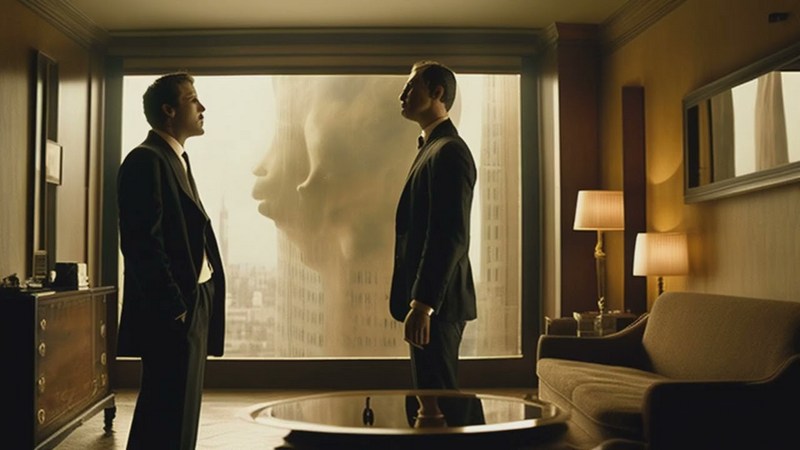
Ultimately, though, Inception presents a fictional portrayal of mutual dreaming based on technology that has no place in the waking world. The idea of entering a shared dream world, navigating multiple layers of dreams, and influencing a dreamer's subconscious is a testament to the creativity of science fiction writers.
A Mutual Dreaming Experiment
Dr. Stephen LaBerge of The Lucidity Institute believes that lab-based mutual dreaming experiments could serve as a means to test the objective reality of shared dreamworlds. These experiments aim to determine whether the dream world is a real alternate reality or simply a construct of the dreamer's mind. Understanding how to control your dreams is essential for this kind of intentional dreaming research.
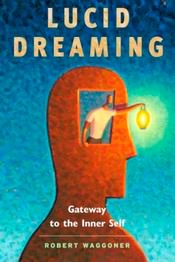
Meanwhile, Robert Waggoner dedicates a chapter to the concept of shared dreams in his book, Lucid Dreaming, Gateway to the Inner Self. He suggests: "mutual dreaming... serves to provide evidence that space, like time, is fundamentally not as we perceive it."
If you're curious to explore mutual dreaming through lucid dream states, here's an experimental approach you might try:
Find a partner interested in this experiment, whether they're friends who lucid dream or people you connect with online. Set a specific time and date to attempt lucid dreaming. Choose a meeting location within the dream, either a local spot if you both live nearby or a famous location like the center of Stonehenge or the top of the Eiffel Tower. Ensure you both have a shared understanding of this location.
During your lucid dream, visit the target location and seek out your buddy. If you meet up, have an unscripted conversation and share an original password or object that you can compare later.
After waking, document the dream's details and timing. Write down as much as you can because details you recall later may be biased by what your friend tells you about their dream. Finally, compare notes with your friend, focusing on shared dream symbols without influencing each other's reports. Identical dream conversations, passwords, or shared objects would be excellent evidence to keep probing further into the world of mutual dreaming.
Final Thoughts
Lucid dreaming offers a unique opportunity to explore the dream phenomena of all kinds. For lucid dreamers, participation in experiments like this can add to our scientific understanding of the brain and the potential but as yet unproven existence of mutual dreams.

About The Author
Rebecca Casale is a lucid dreamer and a science writer with a special interest in biology and the brain. She is the founder of World of Lucid Dreaming and Science Me.