Ever Dream This Man? | World of Lucid Dreaming
The "This Man" phenomenon is one of the strangest viral stories of the early internet age - a portrait of an oddly familiar stranger that thousands of people around the world claimed to see in their dreams. It's also a hoax. The Italian marketer who created it was outed within a couple of years, and the original site was eventually purchased by a horror film studio. But the legend lives on - and the question of why so many people genuinely thought they recognised the face turns out to be more interesting than the hoax itself.
I’ve been writing about lucid dreaming for almost 17 years and the dream-man story is one of the few internet legends that keeps coming back. It pops up on TikTok every couple of years, sweeps through r/Dreams again, and a fresh wave of people send me messages asking if it’s real. So this is the full story - what the legend says, what the science says, and what the marketing reveal actually showed us about how easy it is to retroactively recognise a stranger.
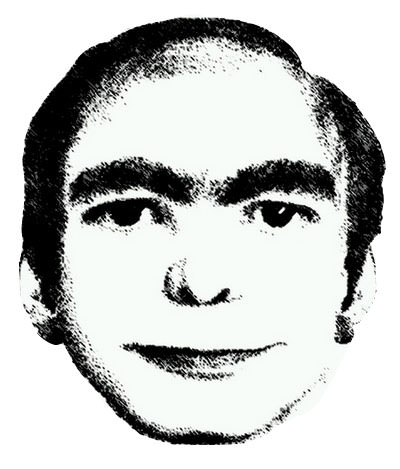
The Story of This Man
The legend of This Man begins in a psychiatrist's office in New York. One of the patients drew the face of a man that had been repeatedly appearing in her dreams. He even spoke to her, giving her advice on her private life, yet she insisted she'd never seen the dream man in real life.
Ever Dream This Man?
The dream man portrait sat on the psychiatrist's desk for several days until another patient said he recognized the face. He claimed that This Man also visited him in his dreams. Curious about this coincidence, the psychiatrist circulated the image among his other patients and, so the legend goes, discovered four more people who regularly dreamed of This Man.
"I have always had this dream of flying in the sky over my city and observing my friends from up there. Since I moved to another house I started meeting this man while flying. Not every single time that I have this dream about flying, but often enough. He flies too, but he never speaks.."
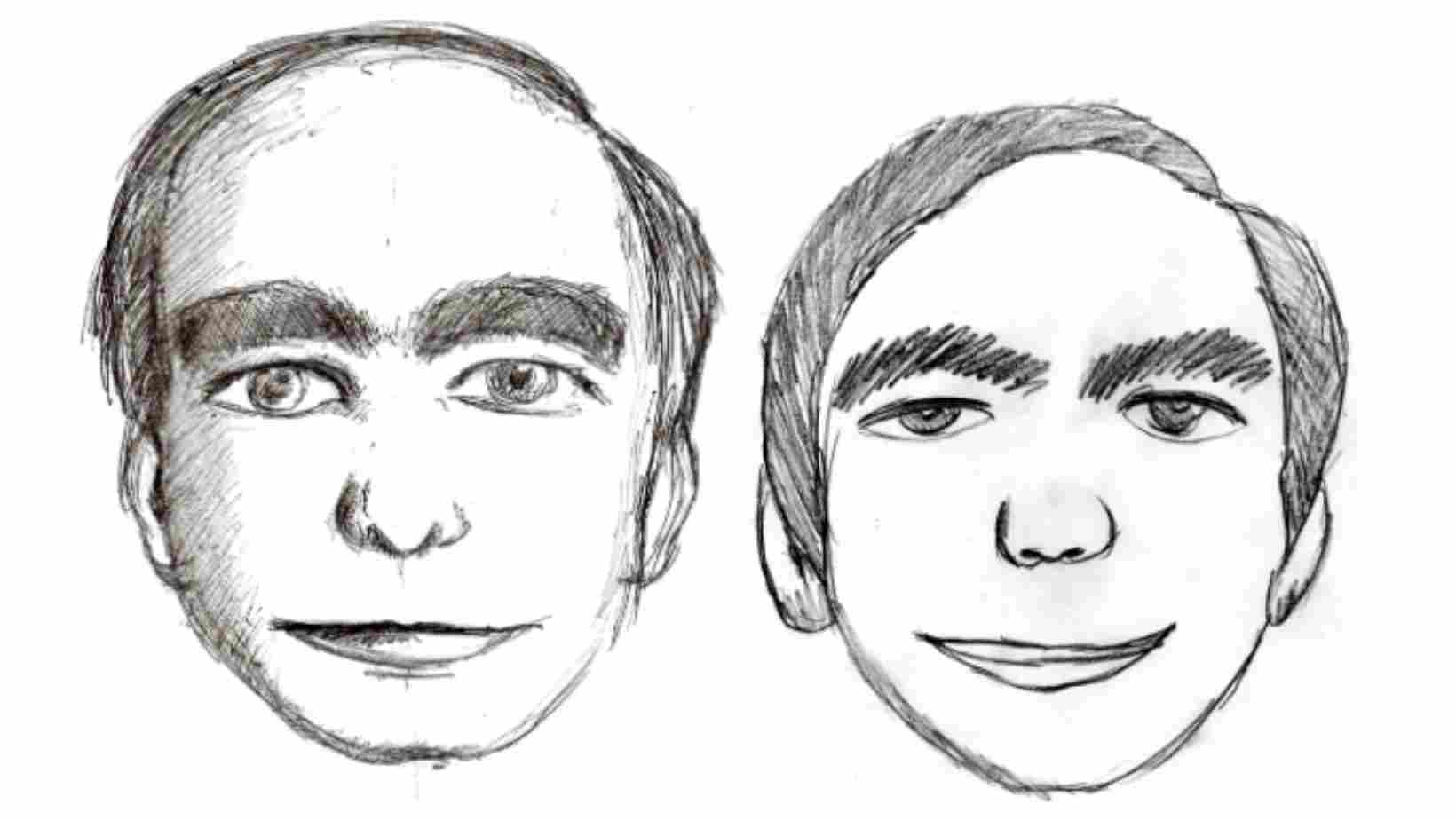
The portrait was spread in cities all around the world, from Los Angeles to Rome, from Auckland to Buenos Aires. Soon, countless people claimed to see this man in their dreams.

This Man in Berlin (left) and Los Angeles (right), accompanied with the text:
Have You Dreamed This Man?
He was frequently described as a benevolent dream character who returned again and again to share dream experiences, dispense advice, and trigger dreamers to have waking epiphanies.
"I fell in love with him from the very first time I saw him in my dream. Even though, if I think about it, I must admit he's really ugly. And yet each and every time, he sweeps me off my feet with his romantic gestures and sweet words. He buys me flowers, jewelry, he takes me out to dinner, or to the beach to watch the sunset."
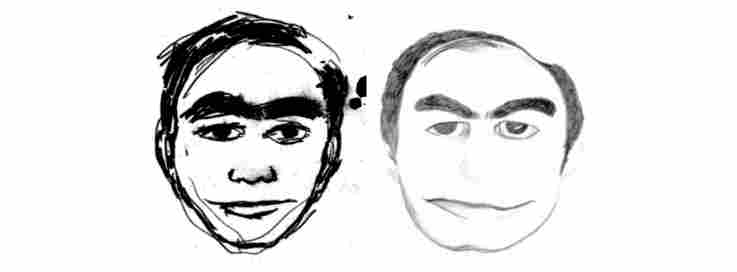
"The first time I had a dream about this man I was having a hard time at work. I had a dream about getting lost in a huge and deserted shopping mall. Suddenly this man appeared and I started running away from him. He chased after me for what seemed like an hour until I found myself against a wall in the kids area in a supermarket. At this point he smiled at me and he showed me the way out towards the cash desks and I woke up. Ever since that night this man has appeared in all of my dreams and he always gives me directions to get out of the dream and wake up."
Theories of This Man
#1. This Man is an Archetype
Carl Jung's psychoanalytic theory suggests that This Man is a universal dream archetype. Jung knew that dreams ultimately come from the unconscious mind, which is seeded by both individual and universal experiences. It's only natural that we might develop similar dream characters, based on shared experiences of movies, memes, and mainstream media. In lucid dreams, you can directly engage with such characters to explore their meaning through dream interpretation.
If true, This Man could stem from the collective unconscious. And he could take the form of any one of Jung's archetypes; namely, the Self, the Shadow, the Animus, or the Persona. Dream archetypes are especially likely to appear in "grand dreams", which Jung saw as deeply transformative experiences that help to fully integrate the self.
"I dreamt this man... was Brazilian and very handsome. He was a schoolteacher type with 6 fingers on his right hand. He said if the US had a nuclear disaster: go North!"
#2. This Man is a Dream Surfer
Some people are convinced that This Man is a real person who can enter our dreams via some form of mutual dreaming. Of course, this inspires many questions. What does he want? Is he benevolent? Can he plant ideas in our minds, Inception-style?? Can anyone become a dream surfer?
"I have seen this man in three completely different dreams. He was slightly different from the picture, but I recognized him immediately. He appeared suddenly... His message in all three of my dreams was: 'It's all over.' The differences in the picture and the man in my dreams are: his hair was a little longer in the top; his eyebrows were not as bushy. Other than that, he is identical. I had no fear of him, but I had many questions."
#3. This Man is God
According to some religious dreamers, This Man is the image of the Creator, or at least one of the forms in which God manifests himself. For this reason, they believe the advice he delivers in dreams is to be strictly followed.
The dangers of such a theory are soon apparent. What if This Man tells you to do something bad, like murder your first born? Are you going to follow through? What if it's something legal but otherwise life-changing, like sell your house, move to Italy, and become a priest? Can we trust such dreams?
Incidentally, if you dream of This Man tonight and he does urge you to commit murder, don't assume it's God talking. Just blame it on me.
#4. This Man is a Real Memory
Now that you've heard of This Man, is he going to appear in your dreams? It's certainly possible. The odds increase significantly if you spend a decent amount of time thinking, talking, or writing about the guy as I have today. This is actually a lucid dreaming technique called dream incubation, in which you focus intensively on a particular dream character, setting, concept, or goal, in order to dream about it and become lucid.
It's possible, then, that people only recall dreaming of This Man after they've been exposed to the phenomenon in real life. In other words, it all began with that one therapy patient in New York, and the dream man phenomenon developed progressively by imitation. When people are exposed to the idea, they're moved enough to actually see him in their dreams as a reflection of their waking experience. This technique of deliberately incubating a dream about a specific character or theme is called dream incubation, and it's a powerful tool for lucid dreamers.
#5. This Man is a False Memory
Set This Man aside for one moment. Can you visualize the face of any man who appeared in your dreams in the last year? It's actually quite difficult to remember the faces we see in our dreams, even in lucid dreams. This is where keeping detailed records in a dream journal becomes invaluable.
This is not to discredit any portraits that do arise based on the characters of our dreams. But it offers the explanation that, for many people, This Man is a false memory; a face that we retrospectively attribute to a dream character whose facial details we actually can't recall.
Did you know that around 1 in 50 people can't visualize at all? We're talking daydreams, visual recall, or any sense of sight in the mind's eye. If this sounds like you, you may have aphantasia.
#6. This Man is Andrew Lloyd Webber
Since we're brainstorming all possibilities, let's consider the theory of Andrew Lloyd Webber. You heard it here first. Our dreams are literally being invaded by the British composer and impresario of musical theater. What exactly is he doing in the dreamworld? How is he doing it? And are we to assume this is how he got the inspiration for Cats?

Have you dreamed This Man?
The Truth About This Man
While it was fun exploring the possible explanations for This Man, it turns out that this whole adventure was, sadly, a hoax. Sorry about that. But don't throw your screen at me just yet. The psychology of the hoax is really cool in itself.
This Man was actually created by marketing strategist, Andrea Natella, founder of Italy's first unconventional communications firm, Guerilla Marketing. Its entire modus operandi is to design subversive hoaxes to drum up public interest for commercial products.
In 2010, it was exposed that Guerilla Marketing owned the website ThisMan.org, and supplied a great deal of the mythology, images, and quotes on the subject. Public interest and media mentions took care of the rest.
After This Man went viral, the website was purchased by the horror movie production company, Ghost House Pictures (The Grudge, Drag Me To Hell, Poltergeist). The screenwriter, Bryan Bertino, created a story in which “an ordinary guy discovers that people he has never met are seeing him in their dreams. Now he must find out why he is the source of nightmares for strangers all over the world.”
The hoax would have given the movie fantastic exposure, had it not been canceled before it was even cast. Interestingly, the creators had no interest in keeping the hoax going for the movie, but wanted to explore the idea in a dark and possibly comic way.
Anatomy of a Hoax
This Man is a cool hoax because it taps into that rabbit hole of intrigue we all love: dreams. But it also exploits an optical illusion that turns This Man into Every Man. Take a close look at the original portrait of the guy. Do you notice anything particularly strange about this face?
This Man is Every Man?
Cover up one side of his face with your hand. On the left, his hair is fuller; on the right it's thinner; and in the middle he's even balding.
The same effect applies to his eyes, lips, and nose. On the left, his eye is hooded, lips are full, and his nose is big; on the right, the eye is shallower, the lips thin out, and the nose disappears altogether. We unconsciously forgive this, having seen similar artifacts in faxed or poorly printed images.
Indeed, the stippling effect allows us to subjectively choose the size of the ear lobes and the strength of the jawline, depending on whether we see shadows or negative space. Forget the fact that virtually no-one would use stippling to sketch a dream man for their psychiatrist. We're just too awed by the story to give it due attention.
This amalgamation of facial features, designed as a kind of catch-all to rouse a sense of familiarity, is what makes This Man work. It allows for a subjective interpretation of This Man, helping him fit many blurry dream character memories if we really want him to. Indeed, the only thing we can definitely say about the man everyone sees in their dreams is that he has really huge eyebrows.
Of course, you'll notice there's no color in the portrait, and not one of the dream quotes tells us about This Man's race, eye color, age, height, language, and other identifying features. These were deliberately omitted as recurring inconsistencies would have helped to collapse the hoax.
Why We Dream of Strangers in the First Place
The fact that the hoax worked at all is the most interesting thing about it. Even after you know the portrait is a deliberately ambiguous composite, you can probably still summon a memory of dreaming about someone who looked a bit like that. That feeling - "I think I've seen him" - is what every successful viral image exploits. It’s also a real phenomenon worth understanding on its own terms.
The brain’s face-processing centre, the fusiform face area, is one of the busiest regions during REM sleep. We dream of faces constantly, and most of them aren’t accurate reproductions of people we know. Sleep researchers have shown for decades that dream characters are typically composite faces - features assembled from multiple memories of real people, blended together so seamlessly that the dream-self doesn’t notice the joins. You think you’re looking at a specific stranger, but the face is more like an averaged sketch made out of several familiar ones.
This is why dream-stranger faces feel so familiar when you wake up and try to recall them. They are familiar - they’re reassembled from people you know - but they don’t correspond to any single individual. Cognitive psychologists call this the “average face” effect, and it’s the same reason composite portraits tend to be perceived as more attractive and more familiar than the individuals they were made from. The dream brain has been making composites since long before viral marketing campaigns started exploiting them.
On top of that, our memory of dream faces is unusually weak. Detailed face recall in dreams is rare, even for experienced lucid dreamers - I’ve covered the broader topic of face perception in dreams in how to create lucid dream characters. When you’re asked retrospectively whether you dreamt about a specific face, your brain happily fills in the gaps. The face you describe a day later is rarely the face you actually saw in the dream. So when someone shows you a portrait of an ambiguous-looking stranger and asks if you’ve dreamt of him, the answer is almost always “maybe” - and that’s exactly what the hoax was designed to extract.
The TikTok Resurgence
Every couple of years, the This Man phenomenon resurfaces on social media. The most recent wave has been on TikTok, where creators repost the original portrait alongside the “Have you seen this man in your dreams?” framing, often without mentioning that the campaign was outed as a hoax over a decade ago. The algorithm rewards mystery, so unsolved-stranger content tends to do well. A whole generation of viewers who never saw the original 2008 campaign encounter the image fresh and respond with the same retroactive familiarity.
None of which makes the phenomenon less interesting - if anything, it shows how durable the cognitive trick is. Whatever the medium, the same composite portrait + the same suggestive question = the same statistically inevitable response. People will say they’ve dreamt about this man. They genuinely believe it. And the neuroscience of face composites and dream confabulation is exactly why they’re not lying.
Frequently Asked Questions
Who is the man in everyone’s dreams?
Nobody. The portrait was designed in 2008 by Italian marketer Andrea Natella through his firm Guerilla Marketing as part of a viral campaign tied to the website ThisMan.org. The face is a deliberately ambiguous composite drawn with stippling and asymmetric features, designed to feel familiar to as many viewers as possible. There is no real "dream man." The phenomenon is a marketing hoax that worked because it exploited a genuine quirk of how the brain remembers dream faces.
Is the dream man real?
No. The original ThisMan.org website and the supposed psychiatrist-patient origin story were both fabrications by the marketing firm that owned the domain. After the campaign went viral, the rights were acquired by Ghost House Pictures (the studio behind The Grudge and Drag Me to Hell) for a horror film by screenwriter Bryan Bertino. The film was never produced. The "real" face you’re looking at is a 2008 graphic-design composite - not a sketch by anyone’s patient.
Why am I seeing a guy in my dreams?
Most likely because your brain is doing what it always does in REM sleep: generating composite faces from features stored in memory. Recurring strangers in dreams are common, well-documented, and not paranormal. They tend to be amalgams of people you’ve seen recently, characters from films or shows, family members at different ages, or features pulled from the millions of faces you’ve encountered casually. If the same dream stranger keeps reappearing, the dream is probably exploring a theme or relationship that matters to your waking life - keeping a dream journal is the easiest way to spot the pattern.
Has anyone actually dreamt of This Man?
Many people are convinced they have. The catch is that the face shown to them was specifically engineered to feel familiar - the asymmetric features and ambiguous shading mean different viewers can mentally adjust the face slightly to match composite memories of real dream characters. Once you’ve been shown the portrait, retroactive recognition is almost guaranteed. Whether anyone dreamt of that exact face before being shown the portrait is impossible to confirm and unlikely.
Why do composite faces feel so familiar?
Cognitive psychologists call this the "average face effect": composites of multiple real faces are consistently rated as more familiar and more attractive than the individuals used to make them. The effect is robust enough that it’s used in police-sketch software, dating-app aggregation studies, and viral marketing alike. The This Man portrait taps the same wiring - it looks familiar because it averages enough features that it could plausibly be lots of different people you’ve seen.
How do I become aware inside dreams like these?
If recurring dream characters - the dream man or anyone else - are something you want to engage with consciously, lucid dreaming is the practice. Becoming aware that you’re dreaming while still inside the dream lets you ask the character questions, examine its features properly, or simply observe with full presence. The full beginner’s path is laid out in our complete guide to lucid dreaming techniques, with foundation skills (dream recall, reality checks) covered before the seven main induction methods.
So, what do you say? Do you ever dream this man? Almost certainly, yes. He's every man. And if you can't retrofit him into your dreams, hopefully you'll encounter the fellow tonight.

About The Author
Rebecca Casale is a lucid dreamer and a science writer with a special interest in biology and the brain. She is the founder of World of Lucid Dreaming and Science Me.